Grade-level content, with the language support to reach it
Multilingual learners already think at their grade level. They just need support with their English. Kami brings translation, read aloud, and comprehension support directly into the content they’re already using, so the material stays in reach.
One classroom, many starting points
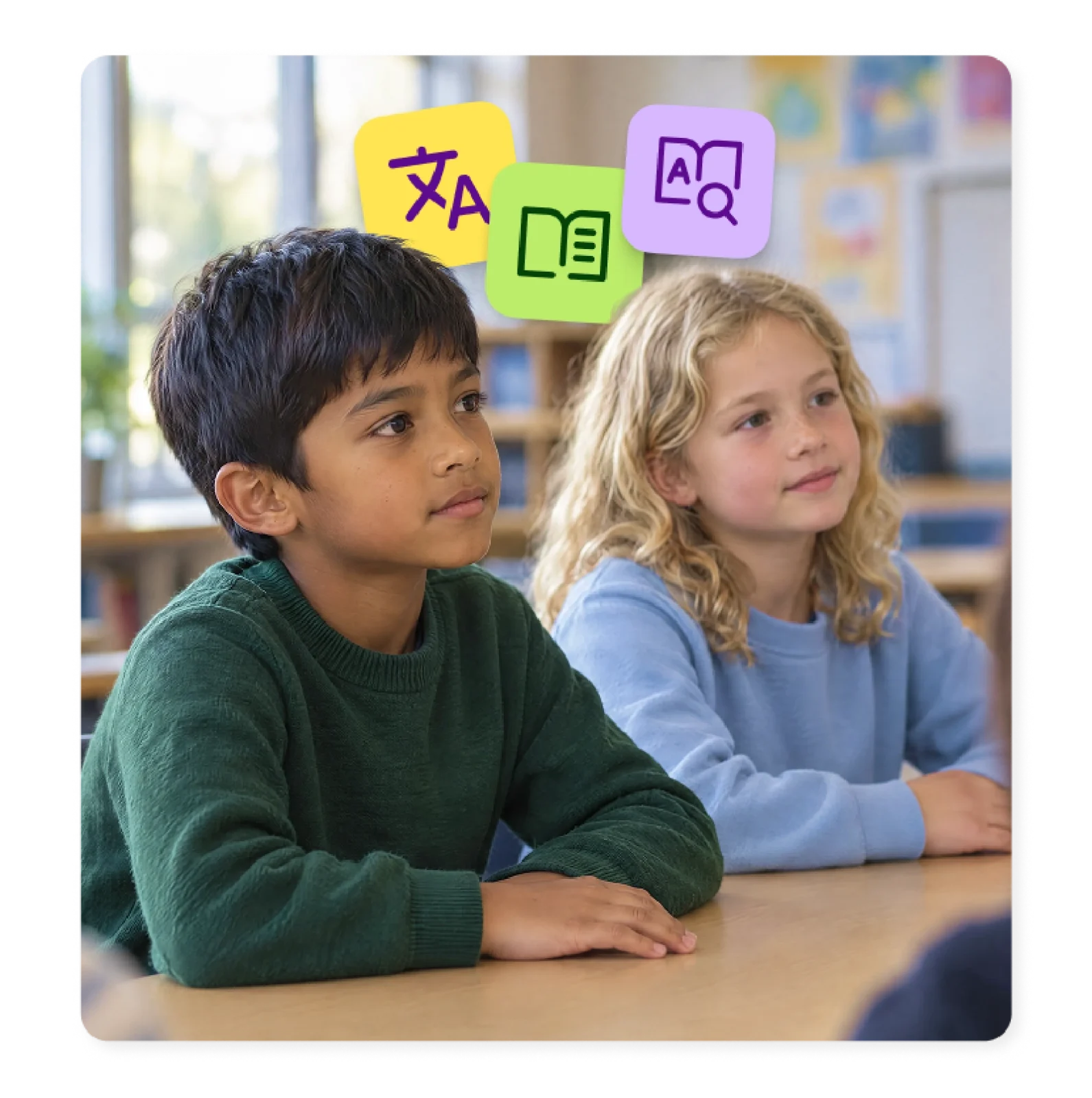
Multilingual learners bring real academic ability, home-language literacy, and lived experience into every lesson. The challenge isn’t the student, it’s whether the classroom gives them enough ways in.
Grade-level content can feel out of reach
A student can think at grade level while still developing English. When materials only work one way, the content becomes the barrier, not the thinking.
One assignment, several language levels
A single class might include a student in a silent period alongside one who’s nearly fluent. One worksheet, read one way, can’t reach both.
Participation before fluency
A student who isn’t ready to speak English yet may still be listening, thinking, and understanding. Classrooms need ways to see that before students can say it.
Translation isn't an accommodation. It's the bridge.
Built to meet students where their language is
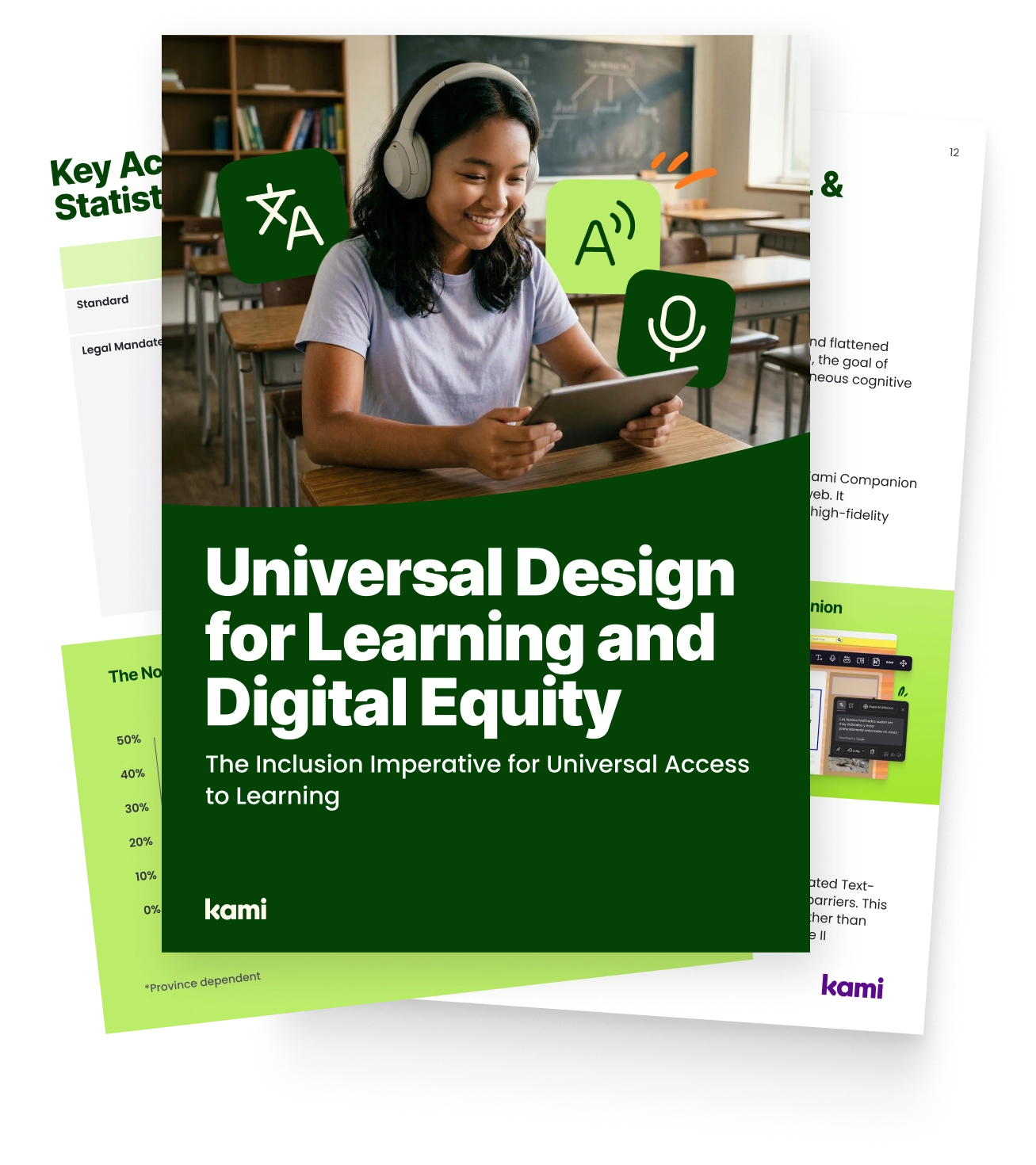
Kami products work together to keep grade-level learning in reach while students build the language they need to participate with confidence.
Access without lowering the bar
Materials stay rigorous. Support comes from translation, read aloud, and multiple ways to interact with the same content, not simplified versions of it.
Room to practice all four domains
Listening, speaking, reading, and writing grow together. Students need low-pressure ways to practice each one inside the work they’re already doing.
Ways to show understanding
Pointing, drawing, recording, and responding all count. Students can demonstrate what they know without waiting until they can write it in full English sentences.
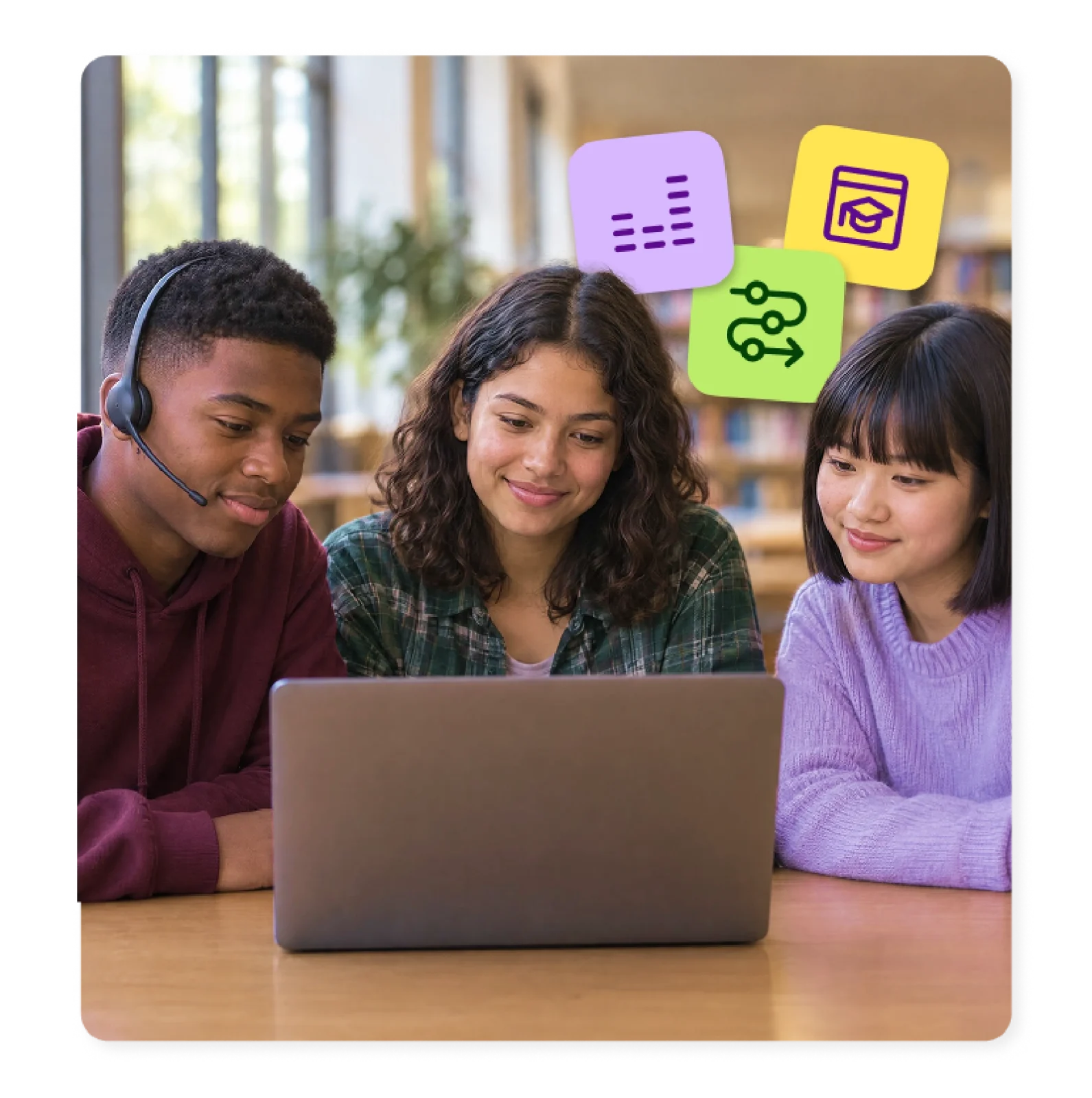
Support across every stage of language acquisition
Access and independence on the web
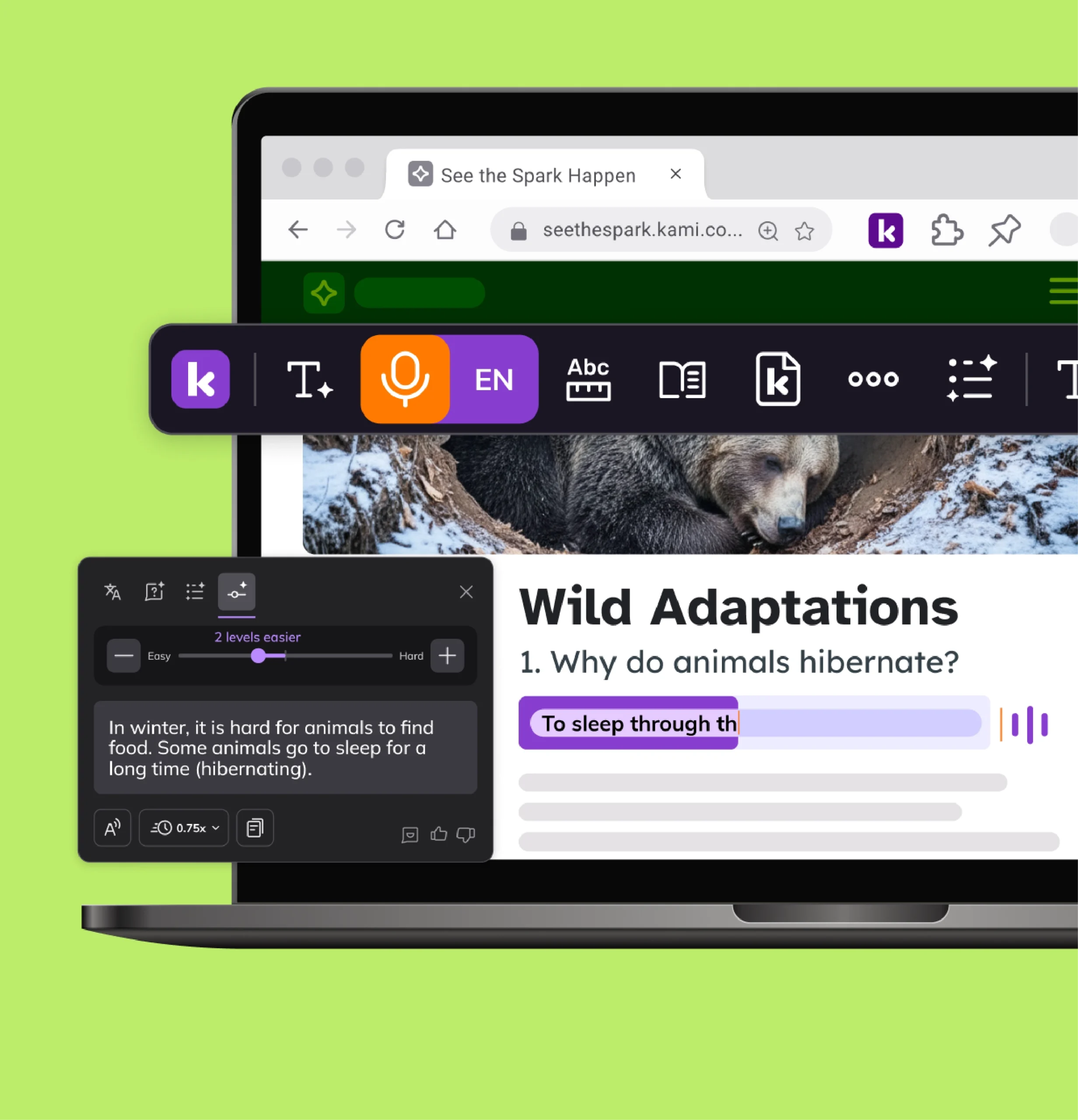
Read aloud, translation, focus, and comprehension supports travel with students across web-based curriculum. A student can access grade-level content the moment it’s assigned, without waiting on a bilingual aide or a separately built version of the material. This runs as a Chrome and Edge browser extension, so the support is there wherever the content is.
Interactive, accessible resources
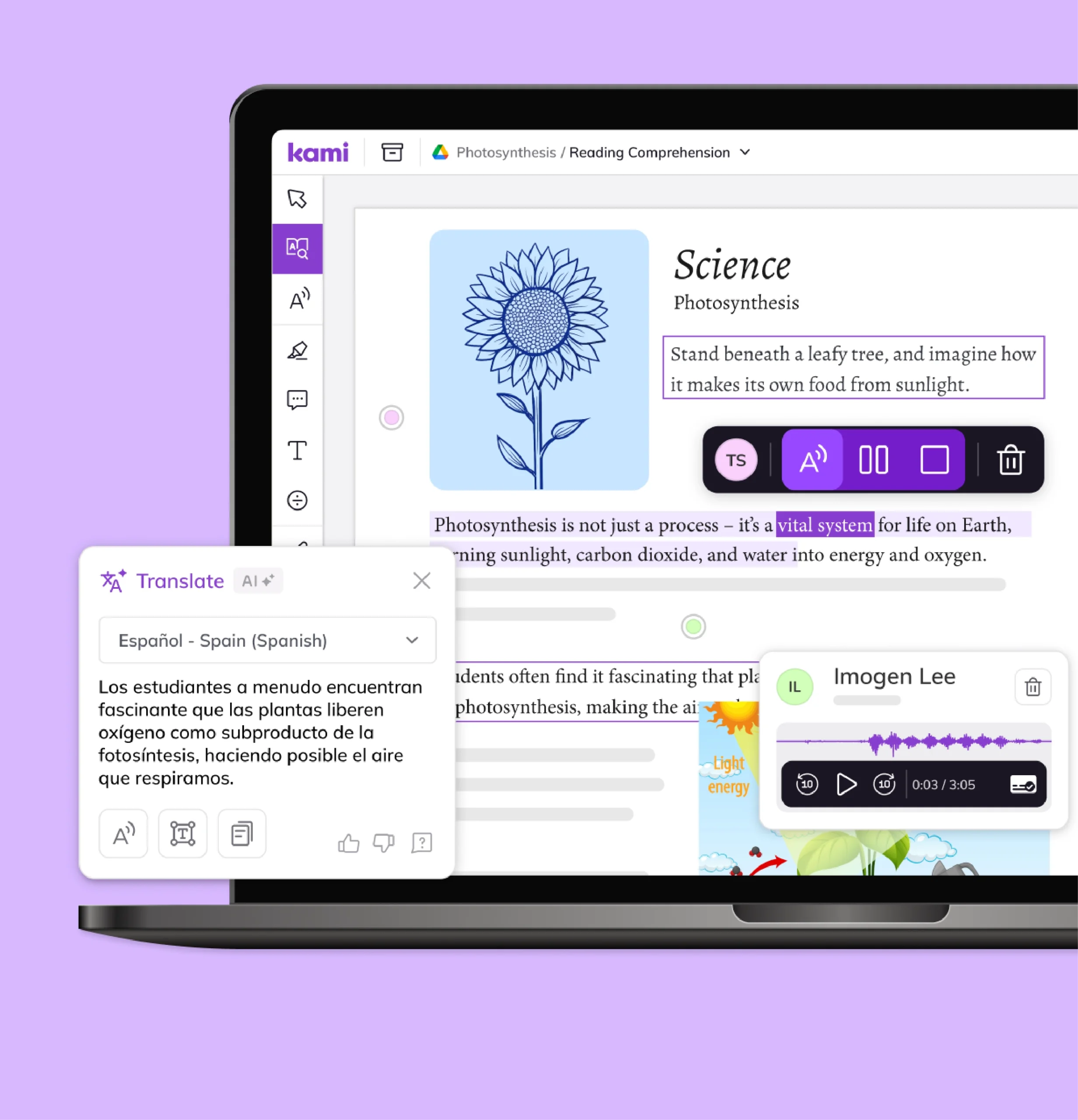
Students use translation support in the Explain menu, annotate, highlight, draw, and record voice responses directly on classroom materials, so teachers can see understanding form in real time.
Build language through expression
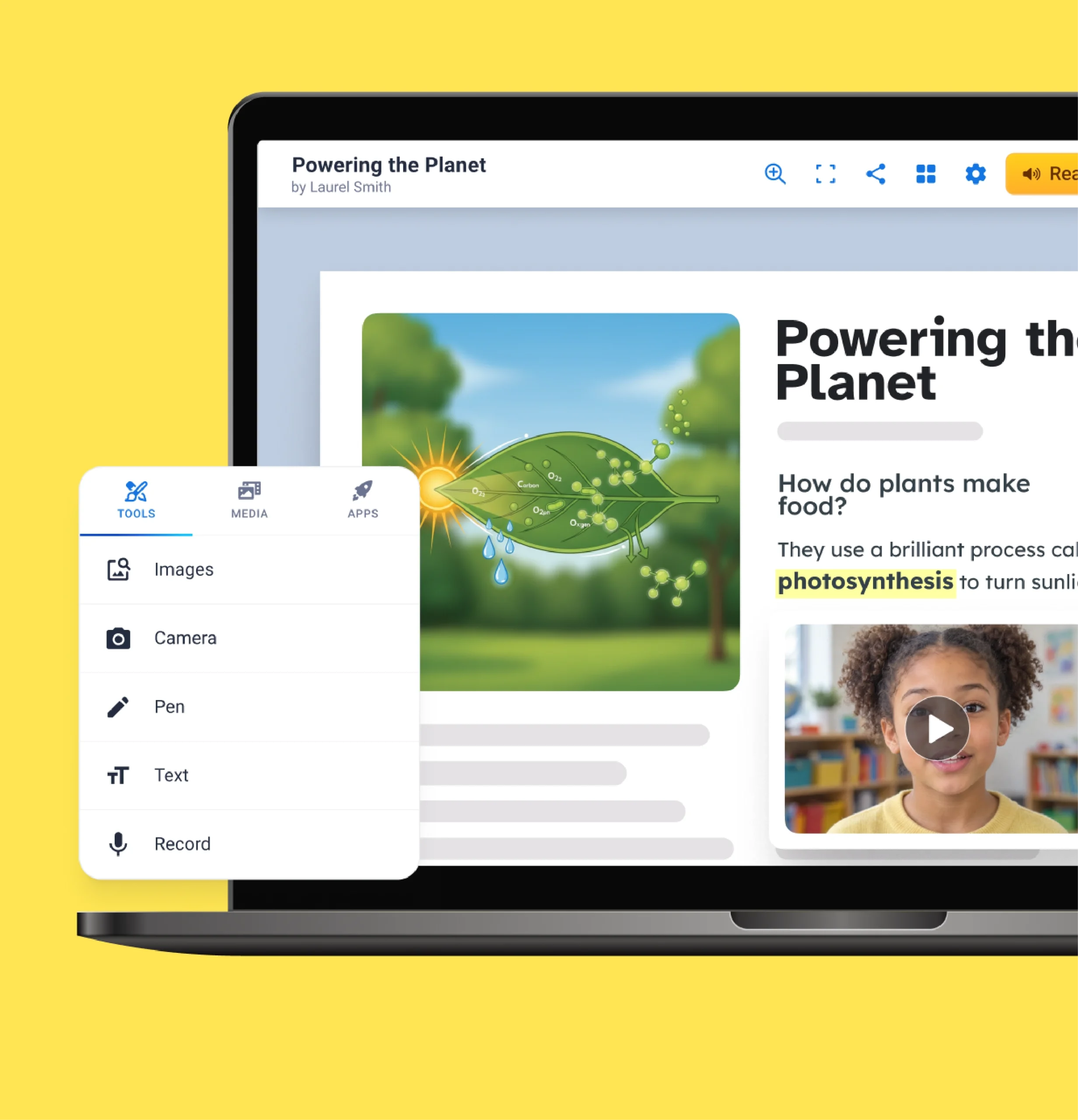
Students create with text, voice, video, drawing, and images, including in their home language, to show their thinking before or alongside their English writing.
Michael Albarracín, Principal, Virtual Campus School, Des Moines Public Schools
Five monitoring tools down to one
Principal Michael Albarracín explains how Virtual Campus replaced the five tools teachers were juggling to track student progress, and got real-time visibility across 380 fully online students.
Trusted by 50+ million teachers and students worldwide

Frequently asked questions
Browse our FAQs below, or visit our Help Center for comprehensive guides and troubleshooting support.
Does Kami replace ESL or bilingual instruction?
No. Kami supports language development inside the learning students are already doing. It doesn’t replace bilingual educators, multilingual learner specialists, or dedicated language instruction. See WIDA’s English language development standards for the frameworks most programs follow.
Can newcomers use Kami Companion before they're ready to speak English?
Yes. With Kami Companion, students get read aloud, translation, and comprehension support on web-based content, which makes the web more accessible while they build English.
Is this support backed by research?
Yes. An Empirical Education study in Moreno Valley Unified School District found an 8 percentile point gain in reading scores for multilingual learners with daily Kami App use. See the efficacy research.
Which Kami products support multilingual learners?
Kami Companion brings read aloud, translation, and comprehension support to web-based content. Kami App and Book Creator add in-context translation and multimodal expression.
Do multilingual learners with an individualized education program (IEP) get the same support as other students?
Yes. Kami Companion language and reading supports work alongside its other accessibility features. See the accessibility page.
Give multilingual learners more ways in